



Astrology is an incredible tool for getting to know yourself. Learning this knowledge is the first step to dealing with your internal conflicts and exercising your essence in the best possible way, whether in your personal, professional, emotional, or any other area. However, this process is much more comprehensive than it may seem: self-knowledge means not only knowing how to look inside yourself, but also perceiving yourself as part of something much bigger, the universe.
Understanding Astrology is essential for those who wish to better understand themselves. And this understanding dialogues directly with our relationships, after all we are social beings.
Today you will find out more about how the stars influence our lives: what lies behind the signs, the impact of the planets, the Moon, the Sun, and, of course, a little about the history of this important area of human knowledge.
Have you ever thought of going deeper into the study of Astrology? Click here and get to know our Astrology Course.
What is Astrology?
We can define Astrology as the field of knowledge dedicated to studying the influence of the stars in the life of the individual. In other words, it assumes that the way the stars are positioned and move in the universe directly interferes in the construction of one’s identity, and may even influence us individually and collectively through challenges and powers.
By establishing this clear relationship between the stars and each one of us, we can say that Astrology is based on a holistic perspective, that is, on the idea that absolutely everything that exists in the universe is correlated in some way. For example: the way the planets are aligned at the exact moment a new life is born says a lot about the talents, missions, and purposes of this being’s existence.
An astrological analysis, therefore, starts by observing the positions of the planets and other stars at the moment of an event, considering the exact day, month, year, place and time. The so-called astrological mandala graphically records these celestial positions so that the astrologer can interpret them.
In our articles, little by little you will discover more about this field, its particularities, and how it is possible to apply astrological knowledge in your day-to-day life, evolving and making the best of every moment!
About the signs
You probably know what your sign is, or at least have had some interest in the subject, but after all, what does it mean to say that someone is Aries or Leo, for example?
First of all you have to remember that the sign is nothing more than your sun sign. It reveals how a person shows himself to the world, guiding his personality and defining the energy he is capable of emanating. Therefore, to be a Leo means to have the Sun in the sign of Leo, and the same is true for the other signs of the zodiac.
We will briefly go over which are the twelve signs of the zodiac.
- Aries: March 21 to April 19. People of this sign are gifted with a great spirit of leadership and tend to be courageous. Impulsiveness and self-centeredness are also traits of their personality that can be worked on through balance and reflection.
- Taurus: from April 20 to May 20. Taureans tend to be patient and very attached to pleasures provided by the senses, which makes them known for their stubbornness and gluttony. They also tend to be firm, receptive, and practical.
- Gemini: May 21 to June 21. Curious, Gemini people are essentially dual and unstable. They are capable of glimpsing the most diverse options, and because of this, they are indecisive. Flexibility, restlessness, and a strong power of communication are some of the outstanding features of this sign.
- Cancer: June 22 to July 22. It is considered one of the most sensitive signs of the zodiac, being intuitive and zealous. Their emotions can be unstable and marked by an exaggerated drama in some moments. In addition, they are gifted with a fertile imagination and a strong protective instinct.
- Leo: July 23 to August 22. Leonines are very self-assured and easily become the center of attention wherever they are. They are also very generous and creative, although they have a propensity for arrogance, self-centeredness, and even authoritarianism.
- Virgo: August 23 to September 22. If you know someone who is calm, methodical, perfectionist and super organized, it is possible that it is a Virgoan. This sign is associated with earth and nature, and its natives are people of great analytical intelligence, who can sometimes be overly critical or overly demanding.
- Libra: September 23 to October 22. It is a very peaceful sign, with great facility for conflict resolution. Its symbol, the scale, can represent the ability to ponder and balance, but also a good dose of indecision. Besides his great aesthetic sense, the Librian is known for his cooperation.
- Scorpio: October 23 to November 21. Scorpios are intense, demonstrate great willpower in all their endeavors, and a significant power of transformation and regeneration. They also tend to be sarcastic and resentful, and know how to draw the best out of their deepest fears and traumas.
- Sagittarius: November 22 to December 21. The sign of the centaur represents the search for meaning in existence. The desire for intellectual expansion is a notable characteristic of this sign, which is always searching for new studies, trips, and knowledge. Despite its sense of humor, it can be impulsive, exaggerated, and too obstinate.
- Capricorn: December 22 to January 19. Capricornians are productive, rational, practical, and have an immense sense of responsibility. Besides the sometimes fatalistic vision and the apparent coldness, the sign of the mountain goat keeps emotions that, once crystallized, must be worked out through sensitivity.
- Aquarius: January 20 to February 18. Most Aquarians have a visionary, fraternal, and supportive essence. Their originality and independence are remarkable, and the Aquarian can end up keeping great impatience and tensions coming from his utopias and constant desires for change.
- Pisces: February 19 to March 20. This sign represents sensitivity and universal love. Those born with the Sun in this sign have a strong intuition and usually absorb the energies of the atmospheres they pass through. Gifted with a strong artistic and imaginative sense, they are so dreamy that they end up disconnected from reality.
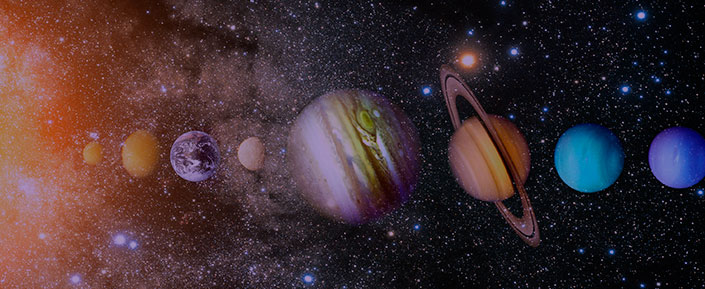
The Planets in Astrology
The planets that make up the Solar System also have their role in the astrological chart! First of all it is worth remembering that the functions of the Moon and the Sun are the same as those of the Planets in Astrology. In short, they represent qualities innate to each individual and how they manifest themselves in their family, professional, affective relationships, etc.
When analyzing the position of each planet in an astrological chart, there are three pillars that need to be considered: the zodiac sign it activates, the astrological house it occupies (for example: house 2, material goods; house 6, work, routine, and health;) and the angles formed with other planets, the so-called aspects.
Thus, for example, the planet Mercury is the ruling planet of communication, language, and exchanges, while the planet Venus connects with the concepts of beauty and love. Meanwhile Jupiter, the largest planet in the Solar System, says a lot about how the person seeks to give meaning to his or her own life.
To better understand your birth chart, it is also necessary to read about the planets and their roles. After all, it is not enough just to know your Sun Sign to know yourself through Astrology. You need to understand the role of each star and how each one of them interferes in your personality and in your life’s missions and learning.
Ascendants
Besides all these concepts, it is also important to know more about the Ascendant Sign. Basically, it represents someone’s style and first impression, and can direct or condition aspects of their personality and essence. It is thanks to the ascendant sign that two individuals with the same sun sign can be and express themselves in such different ways.
The ascendant brings the characteristics through which we are seen and recognized, and also represents potentialities that we need to develop. The idea is that, as time goes by, the individual will be able to better reconcile his sun sign and his ascendant sign, being more and more faithful to his own essence.
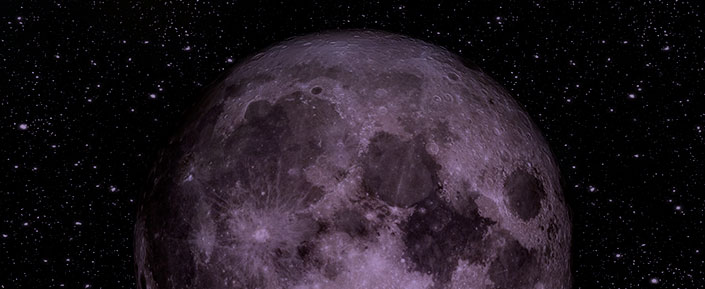
The Moon in Astrology
As we saw earlier, the Moon’s influence in Astrology is the same as that of a planet, and therefore there is a Moon Sign: it is determined by the position this star was in at the exact moment of your birth. Unlike the Sun Sign, in this case the characteristics are evidenced when we are in our most intimate circle of acquaintances, or within ourselves. In other words, it is the sign that reveals how each person experiences his or her emotions.
For example: the person with the Moon in Cancer feels emotions in an intense and even dramatic way. The Moon in Leo, on the other hand, can make a person feel the need to constantly take the lead in their love relationships, which can generate conflict, especially if the other person is not willing to always remain behind the scenes. On our site we also have a very complete content about the symbolism and function of the Moon in Astrology, so that you can continue your journey in search of self-knowledge!
The History of Astrology
But how did it all begin? According to historical records, Astrology began to be practiced by the peoples who occupied the Mesopotamian region, that is, the oldest civilizations of mankind. One of these peoples, the Chaldeans, was long recognized for their enormous knowledge of Astrology. The appreciation of this knowledge was such that many cities had their own stargazing towers.
The Greeks began their astrological studies and knowledge after the conquest of the Persian Empire. Later, when Rome conquered Greece, it absorbed all this knowledge, and Astrology reached its peak. There were even emperors who used astrological knowledge to better understand their rivals and the opportunities for growth of their empires.
In the Middle Ages, Astrology and Astronomy were separated, and the former was harshly persecuted, becoming widespread again in the Renaissance. In fact, world-renowned scientists began to value astrological knowledge, such as Galileo and Kepler, for example.
As a result, little by little it began to be studied and practiced with greater freedom, taking on the status it has today of helping the individual to search for his or her inner self and find his or her essence and relationship with the universe.